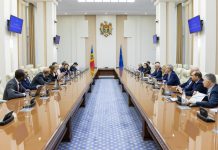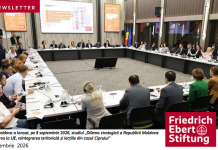

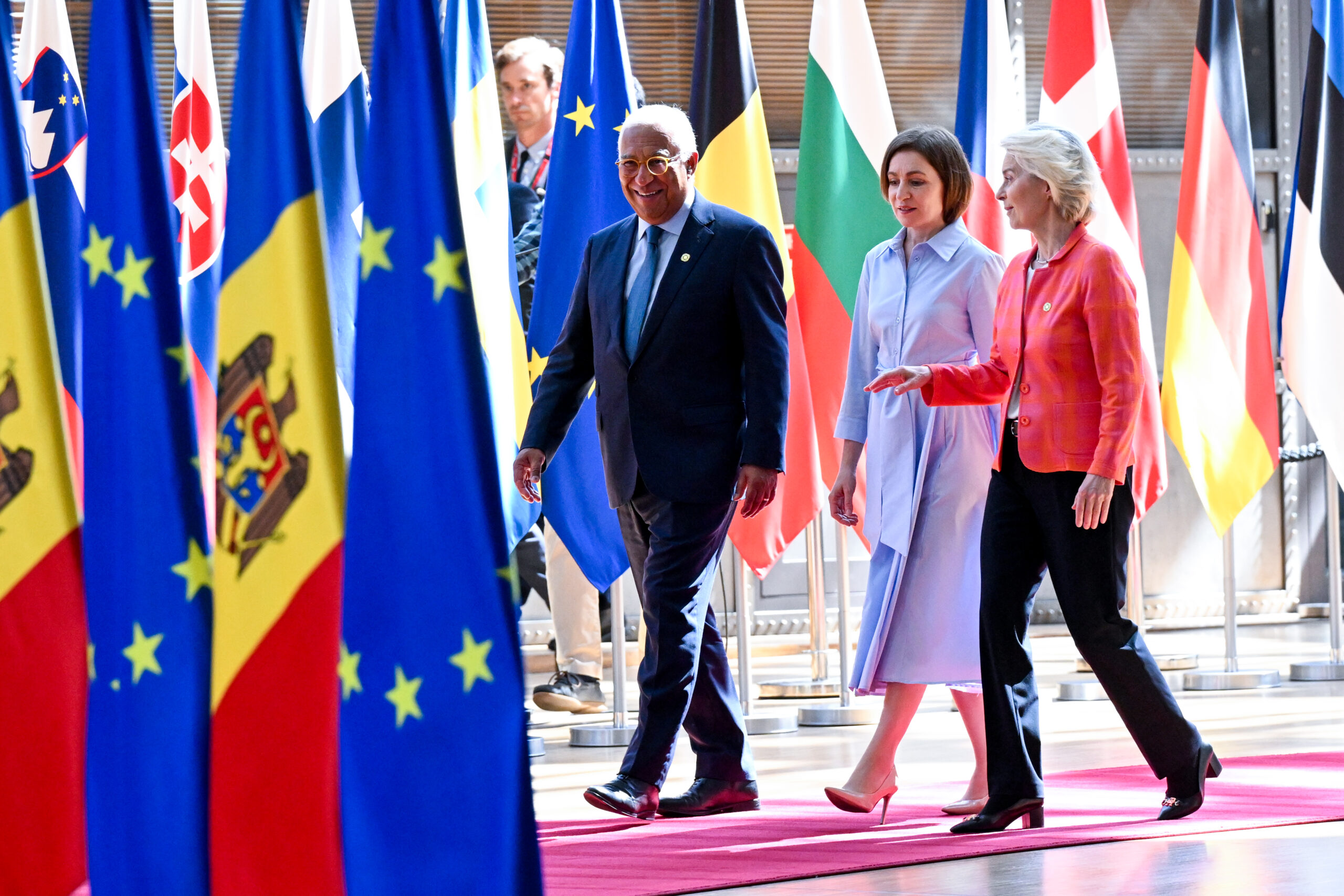
The Brussels Summit marked a significant shift in relations between Moldova and the EU. European partners officially confirmed their readiness for enlargement and for admitting Moldova into the EU. This allows us to speak of Moldova’s transition from the status of a “declarative candidate” to the stage of practical sector-by-sector integration.
Main Outcomes of the Summit
The main economic outcome was the presentation of interim results of the large-scale Growth Plan for Moldova (€1.9 billion for 2025–2027). Chisinau demonstrated high dynamics, unlocking €504 million thanks to the implementation of 93% of the preliminary conditions. Within the framework of this initiative, citizens are already receiving tangible benefits: reduced roaming tariffs, cheaper bank transfers in euros, the construction of hospitals, and energy subsidies. The parties also agreed on joint measures to protect the republic’s sovereignty and to combat cyberattacks, hybrid threats, and disinformation against the backdrop of the war in neighboring Ukraine. Additionally, a new Research Framework Arrangement was signed during the summit, opening up access to EU innovation and research funds.
The priority tasks for the near future remain justice reform, as the success of negotiations on the first cluster is directly tied to a tough fight against organized crime and corruption. Another priority is energy independence, with the parties accelerating the diversification of gas and electricity supplies, as well as integration into the single EU energy market. Furthermore, institutional reform is key; in October 2026, EU leaders will hold a special summit to discuss internal reforms of the European Union itself in order to prepare the bloc for admitting new members, including Moldova. The challenges for Moldova at the current stage of European integration are exclusively practical, technical, and geopolitical. Following the opening of the first cluster, the EU shifted from political advances to strict monitoring of the fulfillment of obligations.
A number of specific risks of the negotiation process for Moldova should also be mentioned. First and foremost is the factor of “package separation” from Ukraine. At present, discussions on the decoupling of the negotiation tracks of Moldova and Ukraine have intensified in Brussels. This could complicate both bilateral relations between Moldova and Ukraine and the logistics of the negotiations. Another problematic feature is the fact that negotiations on 35 chapters require hundreds of highly qualified lawyers, translators of the acquis Communautaire, and profile experts in ministries. The country faces a critical shortage of civil servants of this level, which could artificially prolong the closing of chapters. Finally, one of the main points is that all financial and institutional advances from Brussels are strictly tied to maintaining the pro-European course. Any electoral turbulence is capable of instantly freezing the negotiation clusters, turning the Growth Plan into an unrealized project.
The Second Brussels Summit showed that the EU is ready to provide Moldova with financial support and grant membership status in exchange for the speed of reforms. However, the era of “political advances” is over. The opened first cluster moves the process into a dry technocratic plane, where the main obstacle for Moldova is not so much external pressure, but rather the internal weakness of institutions, a shortage of managerial staff, and the unreadiness of the national economy for fierce competition in the EU single market. Thus, to reach new horizons, Moldova will have to overcome many difficulties.