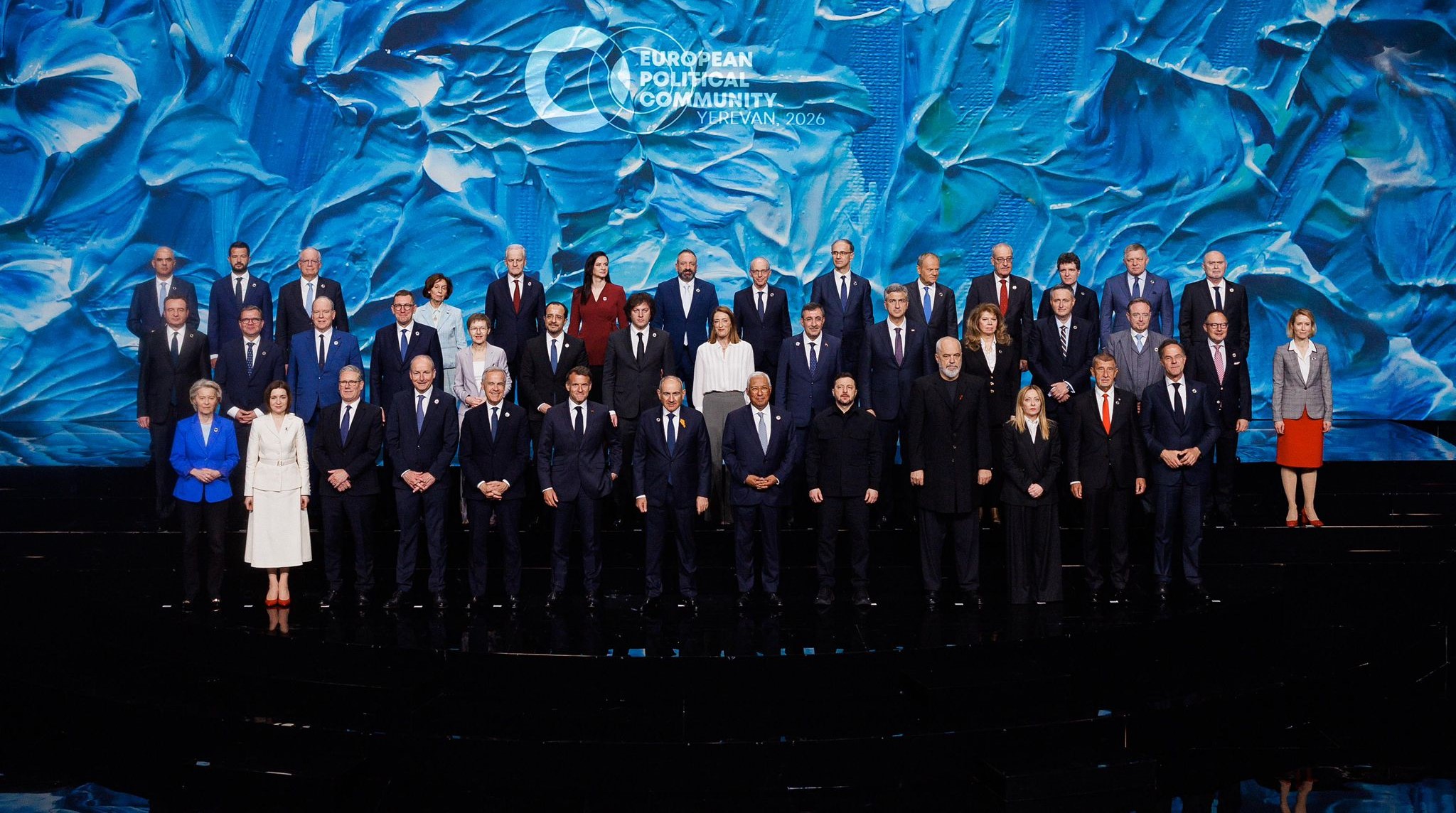
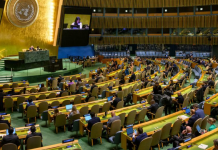
Armenia became the first country in the South Caucasus to host a summit of the European Political Community (EPC), which served as a symbol of European leaders’ recognition of Armenia’s democratic progress and the West’s willingness to support its sovereignty amid cooling relations with Russia.
Armenia’s geographical location places it at a crucial intersection between major economic and political powers. This strategically positioned country in the South Caucasus has historically served as a crucial bridge between civilizations, cultures, and trade routes. For a long time, Armenia was considered Russia’s closest ally in the South Caucasus. However, the growing rift between Yerevan and Moscow on defense issues in recent years is viewed by many analysts as one of the key reasons for Armenia’s foreign policy shift toward the EU. At the same time, the country’s economic and energy dependence on Russia remains. Armenia is attempting to carefully rebalance its foreign policy, seeking to strengthen its sovereignty and security and expand its political and economic ties. Against the backdrop of the upcoming parliamentary elections in Armenia, scheduled for June 2026, the EPС summit is a key political event and a tool for mobilizing the pro-European electorate, as well as a demonstration by the current government of the successes of European integration and the strengthening of ties with the EU.
The 8th European Political Community meeting under the motto: “Building the Future: Unity and Stability in Europe” brought together leaders from nearly 50 countries to strengthen cooperation on democracy, energy security, and economic ties and generated enormous interest among international political commentators, analysts, and representatives of prominent media outlets. The main topics of discussion on the sidelines of the summit centered on the defense of democracy, the war in Ukraine, the conflict surrounding Iran, and its global implications.
For Armenia, hosting an event of this caliber represents a significant step forward in strengthening its course toward European integration, consolidating the country’s role as an important partner in the region, and bolstering its position in the dialogue with the EU on visa liberalization and deepening economic cooperation.
On the sidelines of the EPC summit, significant attention was focused on Russia’s war in Ukraine. In a special address, Ukrainian President Volodymyr Zelenskyy emphasized the importance of strengthening military support for the Ukrainian armed forces and securing new air defense systems to protect Ukrainian cities and energy infrastructure. He also called on European leaders to oppose any easing of sanctions against Russia and requested that the first chapters of the EU accession negotiation dossier be opened.
For the Republic of Moldova, participation in the EPC Summit goes far beyond a mere formality and is of a strategic nature. Against the backdrop of regional instability, this serves as one of the tools for strengthening sovereignty, consolidating democracy, and accelerating Moldova’s accession to the EU. The main message from Moldovan President Maia Sandu at the summit was the need for joint efforts to defend democratic values and stability on the continent: “Europe must become stronger.”
It is worth noting that Armenia, too, faces hybrid challenges and threats emanating from Russia. Pro-Kremlin media outlets openly claim that Armenia is “testing Moscow’s patience” by deepening its ties with Western partners. Against the backdrop of the upcoming parliamentary elections, hybrid risks will rise rapidly. Moldova has experience in combating and countering foreign interference and the illegal financing of political groups, which could prove very useful in advancing Armenia’s European orientation. Europe understands this, and it is no coincidence that, together with French President Emmanuel Macron, Moldovan President Maia Sandu co-chaired one of the summit sessions dedicated to the resilience of democracy in the face of hybrid attacks. The importance of strengthening partnerships and uniting efforts in security cooperation is central to the European agenda.
In summary, it should be noted that the summit cemented Armenia’s departure from the Kremlin’s sphere of influence, a path that echoes Moldova’s, as well as a shared common commitment to energy independence, logistics development, and the pursuit of investment. The so-called Yerevan breakthrough and the choice of a European orientation signal the expansion of the circle of countries striving for democracy and security. Political will is the determining factor on this difficult but strategically important path.
Brief comment by Natalia Stercul, Executive Director of the Foreign Policy Association (APE)