
The material focuses on the official launch of substantive negotiations between Moldova, Ukraine, and the EU regarding the pivotal Cluster 1 (“Fundamentals”) in June 2026. It provides a detailed analysis of how the lifting of the Hungarian veto unlocked the integration process for both nations. The paper examines the “dilemma of a joint start” and demonstrates the inevitability of differing speeds for each state on their path toward EU accession: Moldova’s technical advantage allows Chisinau to target full membership by 2028, whereas Ukraine faces the risk of institutional lag and the prospect of a “hybrid status” proposed by Germany. Special attention is dedicated to the critical friction points of the negotiation process: the specifics of judicial reform, anti-corruption efforts, and the internal vulnerabilities of both parties, including the unresolved Transnistrian conflict.
The EU Negotiation Process: The Dilemma of a Joint Start
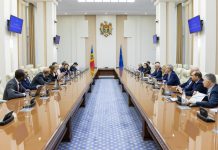
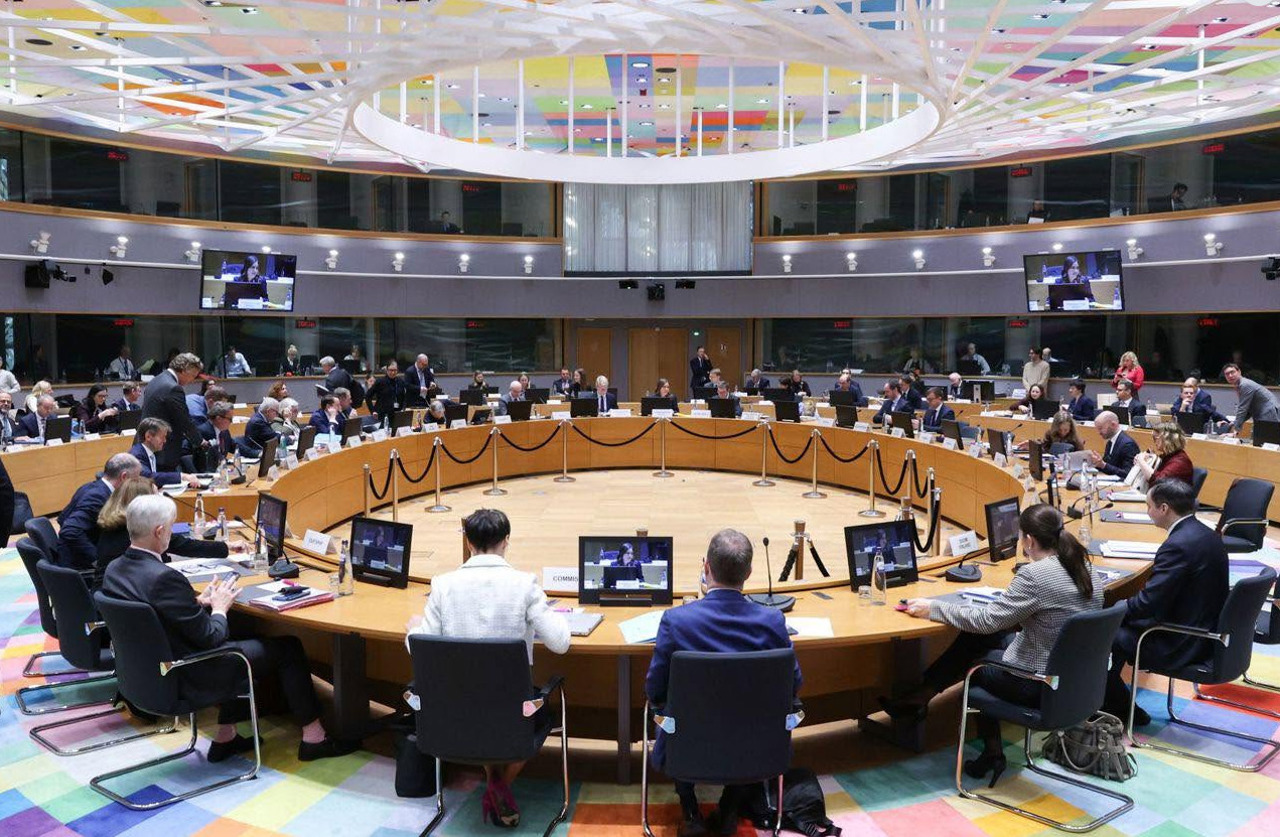
The official launch of negotiations on Cluster 1 (“Fundamentals”) during the Second Intergovernmental Conference marked a high momentum in European integration. The transition from submitting the application to opening substantive legal chapters took a mere two years. Previously, similar timelines were achieved only by Serbia and Montenegro more than a decade ago. However, beneath this diplomatic success lies a revamped, more stringent system of EU enlargement.
The current negotiation process differs radically from previous waves of EU expansion. Under the “enhanced methodology,” Brussels has shifted its focus toward continuous oversight of the core institutions of statehood.
The absolute priorities of Cluster 1 include: the rule of law, the functioning of democratic institutions, public administration reform, fundamental rights, and anti-corruption measures, all of which are vetted first. Progress across all other thematic blocks is suspended until measurable results are achieved in these specific areas. The ultimate objective is the complete adoption and practical enforcement by the candidate country of the entire acquis communautaire, which is divided into 33 chapters and 6 thematic groups. The negotiation process concludes only after all individual chapters are closed.
The EU’s position remains unequivocal: the duration of negotiations is strictly individualized and depends entirely on the pace of domestic reforms. The fact that the countries launched their negotiations on the same day does not guarantee a simultaneous finish.
Official statements delivered in Luxembourg underscore Chisinau’s high momentum, backed by strong technical readiness. To date, Moldova has already completed half of its integration roadmap.
Prime Minister Alexandru Munteanu noted that this stage represents “direct recognition by Brussels of the Moldovan authorities’ consistent efforts to reform the country and strengthen the rule of law.”
Deputy Prime Minister for European Integration Cristina Gherasimov, who presented Chisinau’s negotiating position, described the opening of the cluster as “an important historic milestone and a signal of the EU’s readiness for enlargement.”
EU Commissioner for Enlargement Marta Kos officially confirmed the opening of the cluster, clarifying that Chisinau and Kyiv have demonstrated real results. At the same time, she explicitly pointed to the competitive nature of the process: “The country that does more will be able to move faster.”
Chisinau has fully completed the screening process for all six clusters. Since January 1, 2026, the European Commission has been monitoring Moldova’s progress on a daily basis, designating the conclusion of negotiations by early 2028 as an ambitious yet entirely attainable objective.
Political Unity Versus Technical Decoupling
The lifting of the Hungarian veto in June 2026, following an agreement on minority rights in Transcarpathia, resolved a prolonged political stalemate. Although Brussels views both nations within a single framework of regional security, an artificial decoupling of this tandem by the EU was not entirely ruled out. However, the consolidation of efforts to maintain political unity ultimately prevented a technical split.
Despite Brussels’ desire to preserve the political unity of the enlargement package, hidden behind-the-scenes challenges have increasingly emerged on the European stage in recent weeks, threatening to de facto disrupt this balance. The German Initiative: Berlin has proposed a so-called “hybrid status” for Ukraine. This model implies giving Kyiv early access to key EU institutions including partial political representation, participation in decision-making processes, and accelerated economic integration but without granting full-fledged membership. Such a format for Kyiv creates a structural asymmetry within the tandem, as Moldova does not benefit from a similar special regime. While Chisinau follows the classical, strictly regulated path of reforms, Ukraine could receive an institutional workaround. This could lead to a functional separation of the two countries, running counter to the official diplomatic line of a unified trajectory.
Ukraine at Risk: The Threat of Institutional Lag. While Moldova prepares to close its first technical sections, Ukraine is only beginning this challenging phase. Experts point to a visible risk of Kyiv falling behind due to a slower pace of domestic transformation.
Constrained Timelines: To maintain its momentum and remain aligned with the broader schedule, Ukraine must open seven additional negotiating clusters by July 2026.
Critical Friction Points: Achieving this requires Kyiv to urgently mobilize its public administration, radically accelerate judicial reform, and demonstrate clear, verifiable results in combating corruption.
National Frameworks and Internal Vulnerabilities
Successfully navigating Cluster 1 requires both states to address deep-seated domestic challenges, the nature of which differs fundamentally. This highlights a distinct variance in how the European community perceives these hurdles:
- The Primary Agenda for the Republic of Moldova. Chisinau’s central priority remains the strict maintenance of its reform pace and the systematic strengthening of democratic institutions. Concurrently, the Transnistrian conflict remains an invisible obstacle. Although the EU officially avoids making accession conditional upon resolving the dispute, integrating a state with a territory controlled by a pro-Russian separatist regime generates complex legal, security, and customs challenges. In Moldova’s case, this unresolved conflict is perceived by the West strictly as a vulnerability.
- The Primary Agenda for Ukraine. For Kyiv, the success of the entire accession process hinges on its capacity and readiness to integrate stringent European requirements and sustain structural reforms within a highly complex and volatile security environment caused by the ongoing military actions. Moreover, regarding Ukraine, the full-scale war has transformed Western logic: rather than classifying the situation as a conventional “vulnerability,” Brussels views it as an existential strategic necessity for pan-European security, explaining its willingness to consider “hybrid” concessions.
Consequently, the integration process is highly likely to evolve under a dual-track model, where conventional technical competition intersects with geopolitical special formats:
- Political Accompaniment. Brussels will continue to declare the joint progression of Moldova and Ukraine to maintain geopolitical stability in Eastern Europe.
- Moldova’s Technical Lead. Supported by a full consensus within the EU, Chisinau will advance through its roadmap significantly faster, aiming to close all 33 chapters by 2028.
- Asymmetry of Statuses. While Moldova systematically advances toward full-fledged membership, Ukraine may find itself anchored in the long-term “hybrid” status proposed by Germany, ultimately leading to a divergence in the integration models of the two states.
Thus, the transition to the “Fundamentals” Cluster has shifted European integration from the realm of geopolitical gestures to a framework of rigorous expert evaluation. Moldova has demonstrated its capacity to operate effectively under this institutional scrutiny. The primary challenge for Chisinau now is to sustain its high domestic reform pace, find a strategic balance regarding the Transnistrian settlement, and ensure that exclusive “hybrid” formats designed for its neighbor do not relegate Moldova to the periphery of European attention.
The opinions expressed in this article are those of the author and do not necessarily reflect the views of the Foreign Policy Association.